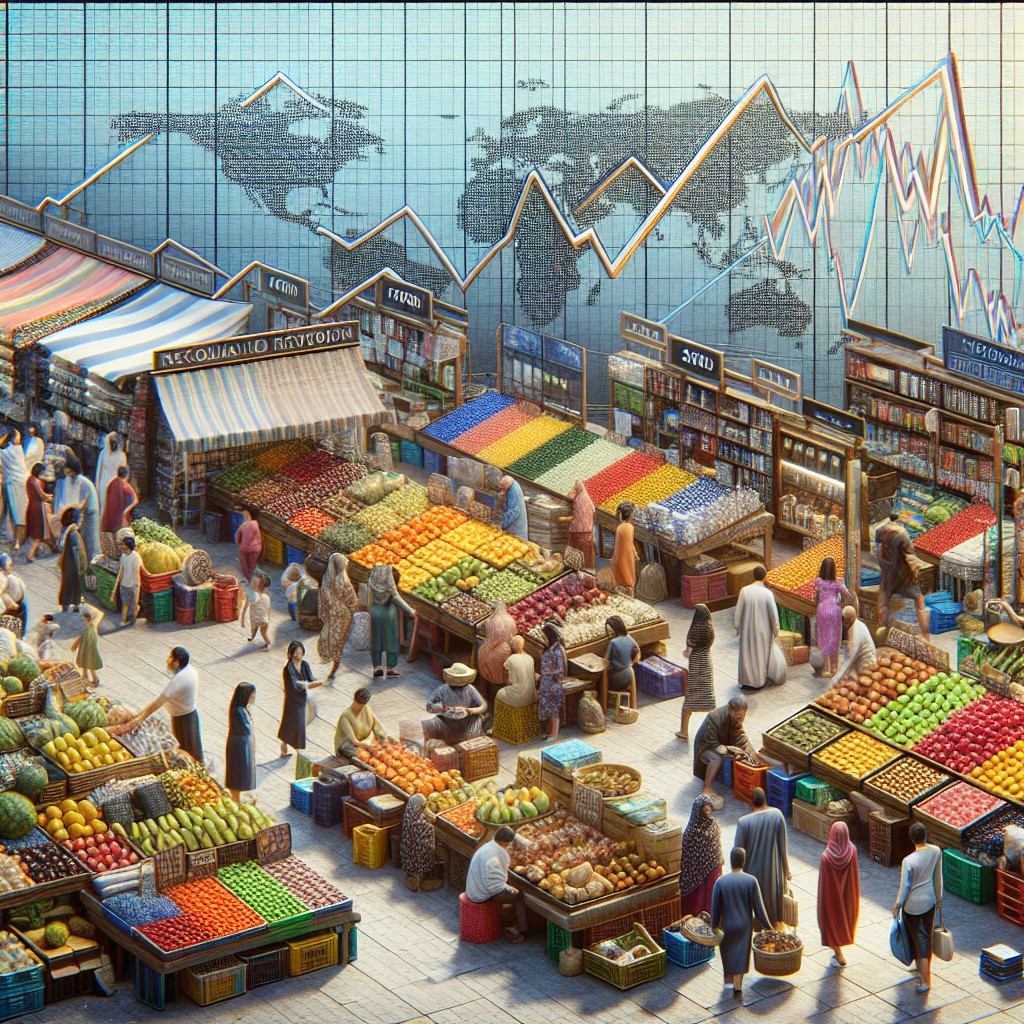
As economies worldwide continue to grapple with fluctuating inflation rates, understanding the factors behind persistent price stickiness has become crucial. The global inflation outlook remains a central concern for policymakers, businesses, and consumers alike as they navigate uncertain economic landscapes.
Supply chain disruptions and their lasting impact
One of the primary contributors to price stickiness across major economies lies in ongoing supply chain disruptions. From the lingering effects of the COVID-19 pandemic to geopolitical tensions and natural disasters, these disruptions have constrained the availability of raw materials and intermediate goods. As a result, producers face higher input costs that are often passed on to consumers, making prices resistant to downward movement, even when demand fluctuates.
Labor market dynamics and wage pressures
Labor markets in many advanced and emerging economies remain tight, leading to upward pressure on wages. In sectors experiencing labor shortages, companies tend to increase wages to attract and retain employees. These higher labor costs contribute to sustained price levels, as businesses adjust prices to maintain profit margins. Wage rigidity, influenced by long-term contracts and minimum wage policies, also plays a role in the persistence of elevated prices.
Strong consumer demand amid economic recovery
Despite inflationary pressures, consumer spending in several regions has demonstrated resilience, fueled by recovered employment levels, fiscal stimulus measures, and accumulated savings. This robust demand supports price stability at higher levels, particularly in services and durable goods sectors. When demand remains strong, businesses have less incentive to reduce prices, further contributing to price stickiness.
Monetary policy challenges and expectations
Central banks worldwide have adjusted their policy stances in response to rising inflation, often tightening monetary conditions through interest rate hikes. However, the transmission of monetary policy effects takes time, and expectations of future inflation can influence current pricing decisions. If businesses and consumers anticipate sustained inflation, they may act in ways that cement current price levels, complicating efforts to reduce inflation swiftly.
Global commodity price fluctuations and their transmission
Commodity prices, including energy and food, have exhibited volatility due to supply restrictions and geopolitical developments. Since many commodities serve as essential inputs across various industries, their price changes have a direct impact on consumer prices worldwide. Even when commodity prices ease, the adjustments to retail prices often lag due to contract terms and the cost structures within supply chains, contributing to the stickiness observed in inflation figures.
Conclusion: navigating an uncertain global inflation outlook
The global inflation outlook faces multiple headwinds rooted in structural and cyclical factors. Persistent supply chain constraints, labor market tightness, and sustained demand, combined with monetary policy lags and commodity price volatility, contribute to the stickiness of prices. Policymakers must balance tightening measures with economic growth objectives while monitoring evolving conditions closely. In the short to medium term, price rigidity is expected to continue, suggesting that inflation rates may remain elevated above central bank targets before gradually easing as these underlying factors resolve.
Frequently Asked Questions about global inflation outlook
What are the main reasons for price stickiness in the global inflation outlook?
Price stickiness in the global inflation outlook results from supply chain disruptions, labor market conditions, strong consumer demand, and delayed adjustments to commodity price changes.
How do supply chain issues affect the global inflation outlook?
Supply chain issues limit the availability of goods and increase production costs, which can keep prices elevated and make inflation more persistent across major economies.
Can tightening monetary policy quickly reduce inflation globally?
Monetary policy tightening impacts inflation with a lag, and expectations about future inflation can slow the price adjustment process, resulting in persistent inflation despite policy efforts.
What role do commodity prices play in the current global inflation outlook?
Commodity price volatility directly influences input costs for many industries, and because retail prices adjust slowly, this contributes to the stickiness seen in global inflation.
Is the current global inflation outlook expected to improve soon?
While some easing may occur as supply chains stabilize and commodity prices moderate, the global inflation outlook suggests that elevated inflation could persist in the near term before returning closer to target levels.